01
Fruit, fish, and protected growing
Citrus, peaches, pomegranates, aquaponic growing, and a greenhouse plan that gives avocados a real chance in the Houston climate.
Houston micro-farm vision
A public farm with thrifted charm and sleek working systems.
Orchard rows, aquaponics, an avocado greenhouse, renewable power, rain catchment, a market stand, classes, tours, and gatherings.
The founding vision
The Borrowed Earth began as a dream for a Houston place where food, energy, water, learning, and community could work together in public.
01
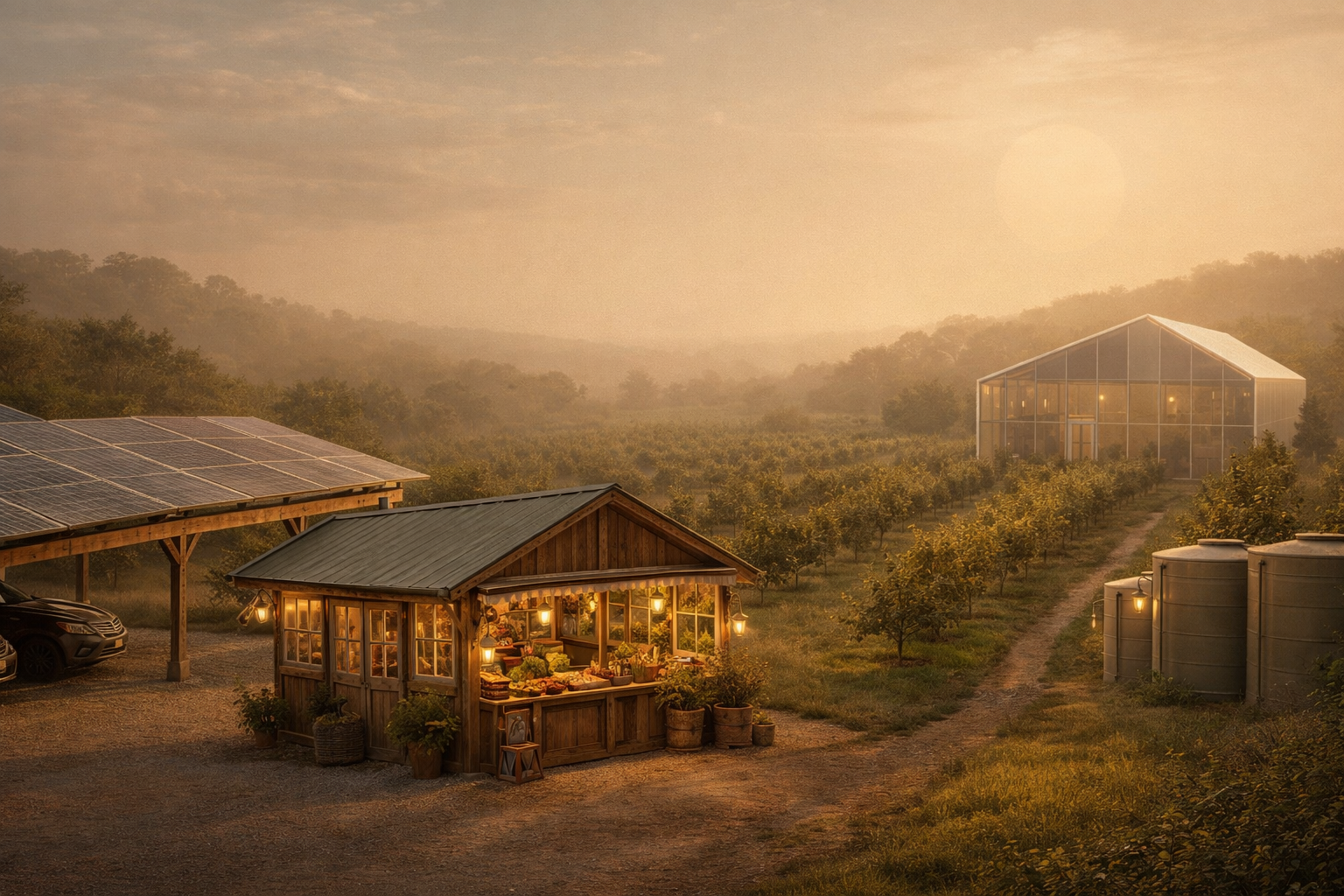
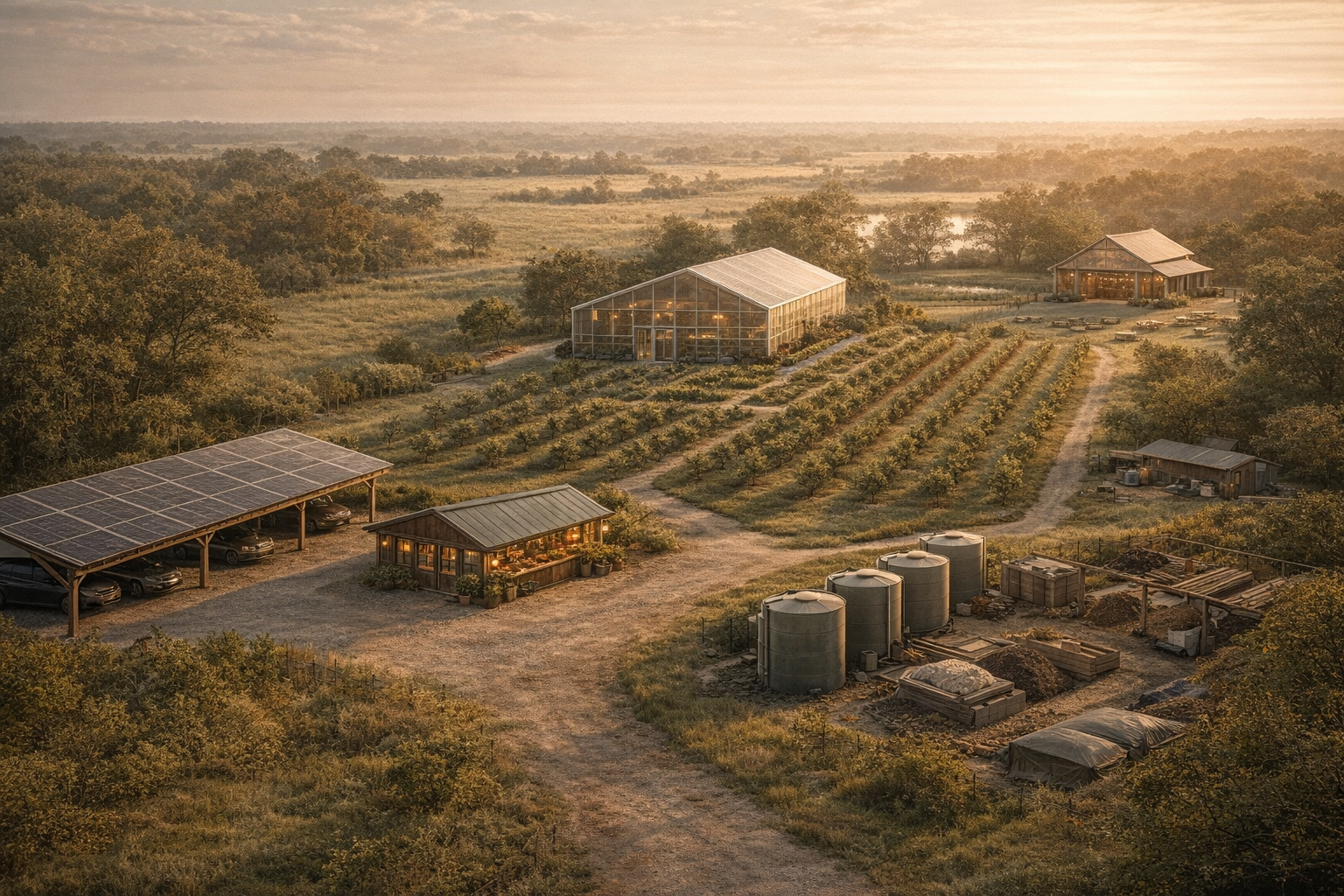
Citrus, peaches, pomegranates, aquaponic growing, and a greenhouse plan that gives avocados a real chance in the Houston climate.
02
Solar shade over parking, rainwater storage, composting, and biogas support a practical energy loop without leaning on huge battery banks.
03
The market, tours, classes, and event center can feel thrifted, welcoming, and a little enchanted while the working systems stay sharp.
From the build journal
The journal is where orchard planning, greenhouse design, renewable systems, crop economics, and public-space ideas become a record people can follow.
Featured story
New dispatches will document the real choices behind the farm: varieties, layouts, systems, budgets, tradeoffs, and public invitations.
Visit the journalExplore the archive as it grows from a farm dream into a practical build record for food, energy, water, education, and gathering.
Now showing: Journal overview
The long road
The Borrowed Earth has to be beautiful enough to invite people in and practical enough to survive Houston heat, storms, budgets, and seasons.
Phase 01
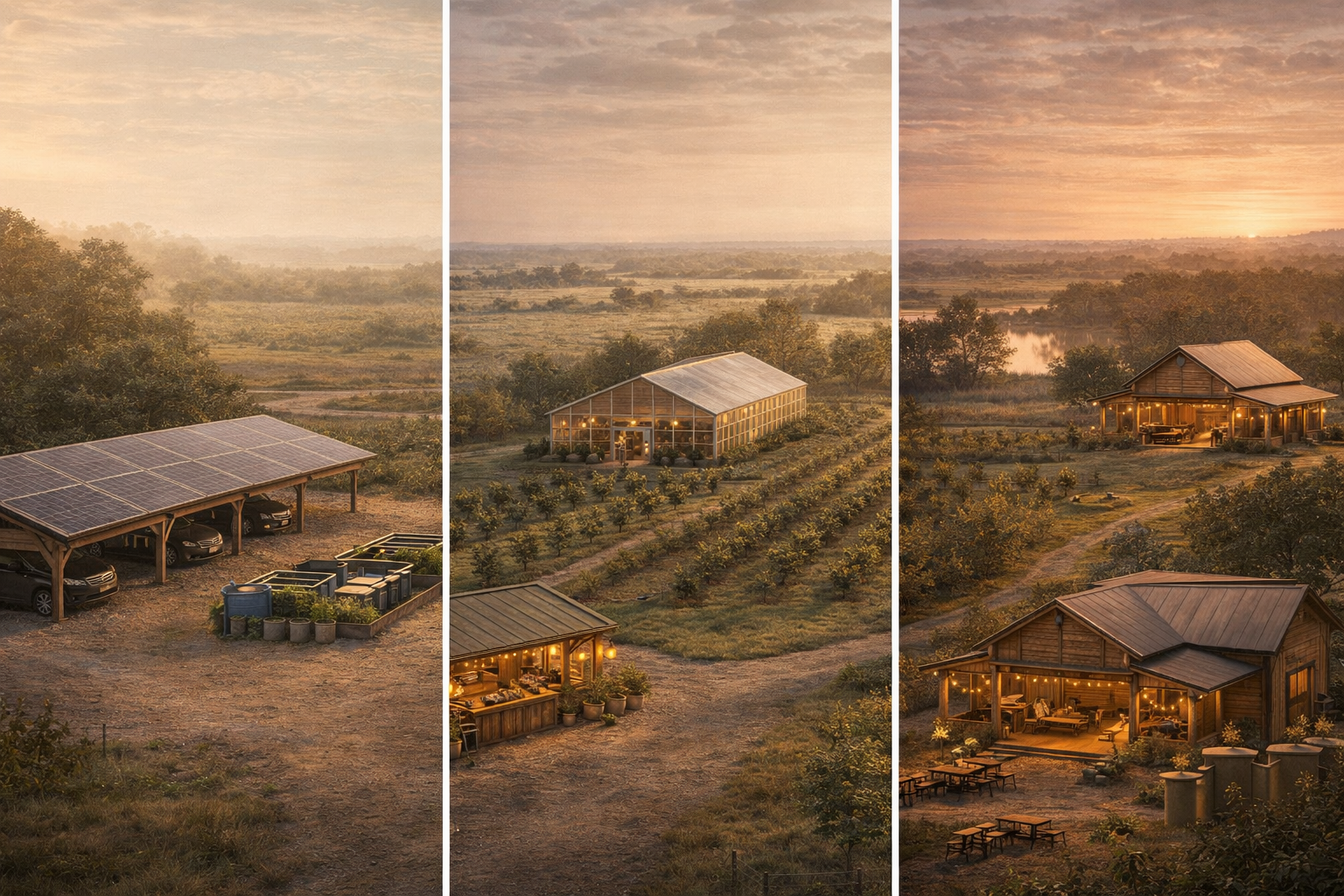
Choose fruit varieties, water plans, and growing systems that make sense for Gulf Coast humidity, heat, freezes, and real maintenance.
Phase 02
Connect solar shade, rain catchment, compost, biogas, aquaponics, grid backup, and farm operations without pretending any system is free.
Phase 03
Make the farm stand, store, tours, classes, and event center feel collected over time: repurposed, warm, useful, and just strange enough.
Phase 04
Let each season prove the crop plan, guest experience, staffing, safety, and economics before asking the public to believe more.
Stay close to the work
The journal keeps the public connected to the decisions behind the place: what to grow, what to build first, what to postpone, and what the farm needs to become real.
Follow orchard plans, greenhouse notes, system diagrams, and seasonal updates.
Explore Houston growing calendars, crop choices, aquaponics notes, and reusable farm tools.
Watch for tours, classes, volunteer days, market updates, and gathering invitations.
See what the build needs next, from materials and plants to partners and practical expertise.
Come back as the dream moves from map to budget, from budget to pilot, and from pilot to place.
The next chapter
The Borrowed Earth is still becoming: part orchard, part greenhouse, part market, part classroom, part gathering place, and part living experiment in doing more with what the earth can lend.